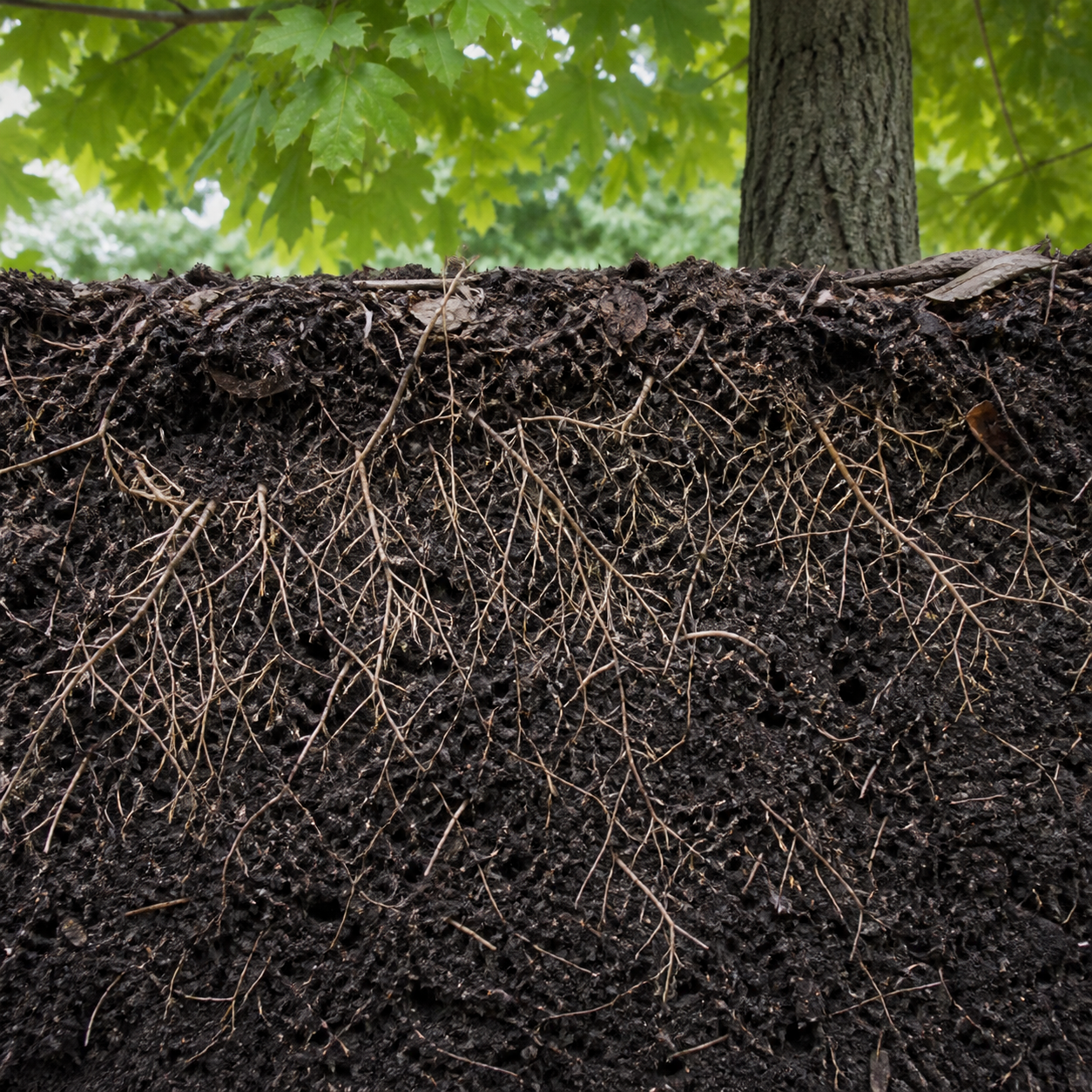
We notice tree problems from the ground looking up. Thin canopy. Yellow leaves. Dead tips. Bugs having an all-you-can-eat buffet. But by the time trouble shows up overhead, the tree may have been dealing with stress below ground for a while.
The canopy is often the messenger
Roots need oxygen, water, pore space, and living soil. Compaction, poor drainage, drought, construction damage, and low organic matter can make it harder for a tree to take up what it needs.
A stressed tree has fewer resources for growth, defense, and recovery. This means that poor root health can leave the door cracked open for pests and diseases to attack and make the damage harder for the tree to handle.
Handle the problem in front of you
If there is an active pest or disease, treat it with the right core treatment. That might mean an insecticide, fungicide, or another targeted option. Stopping there can solve today's problem without doing much about why the tree struggled in the first place.
PHC Pro also recommends a health treatment when it makes sense. The core treatment addresses the pest or disease. The health treatment supports the roots, soil, and tree so it has a better shot at long-term recovery.
A healthier tree is a tougher tree
Healthy trees are generally better able to tolerate normal pest pressure, compartmentalize injury, and recover from stress. No product makes a tree invincible. The goal is to improve the conditions that let the tree do more of its own work.
Field note: Product labels and federal, state, and local requirements always come first. Confirm the diagnosis and use only labeled sites, rates, methods, and combinations.