
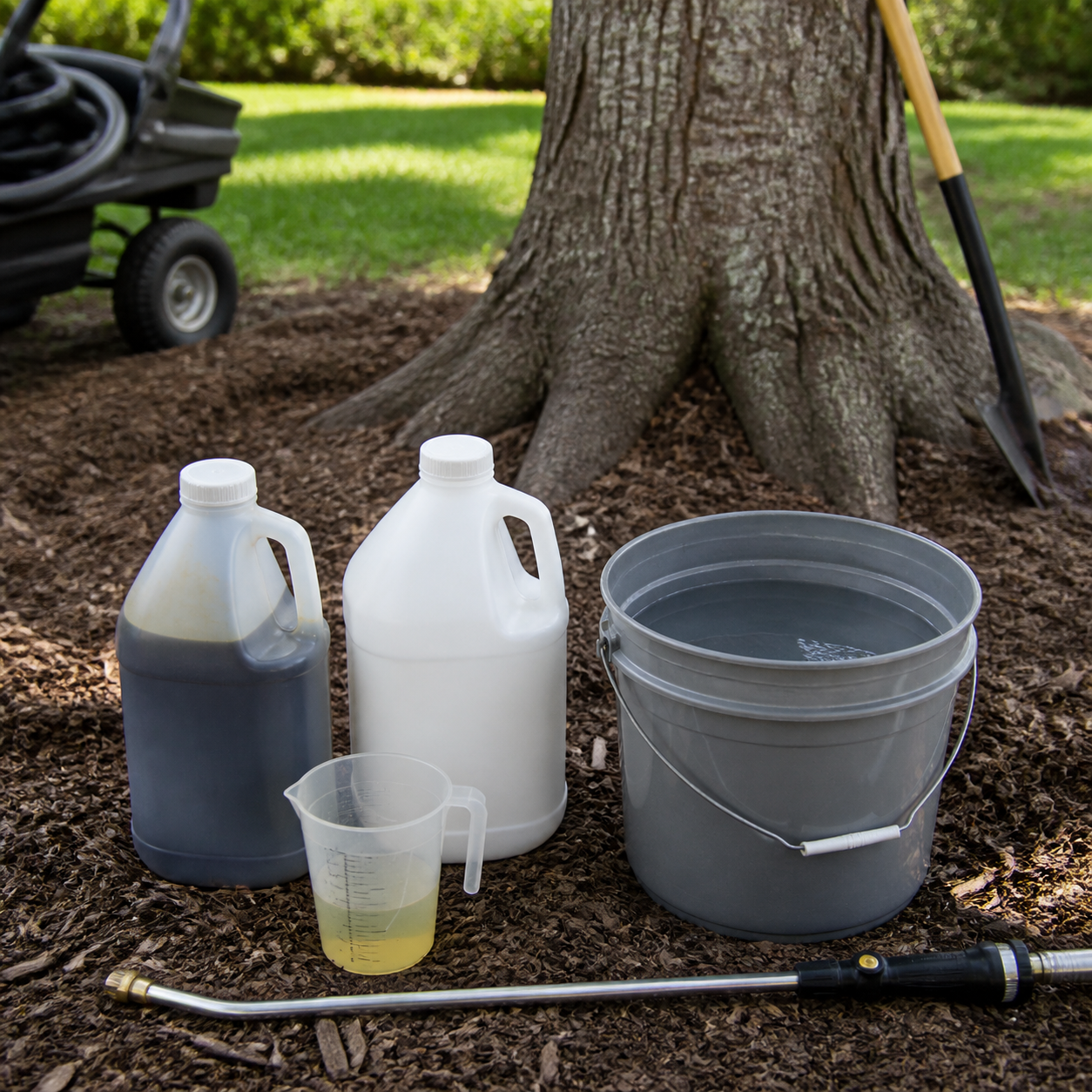
Fertilizer and soil amendments both go into a PHC proposal, but they are not interchangeable. One mainly supplies nutrients. The other works on the conditions around the roots. Think groceries versus fixing the kitchen.
The quick comparison
| Fertilizer | Soil amendment | |
|---|---|---|
| Main job | Supply plant nutrients | Improve soil conditions or biology |
| Typical response | Greener foliage or added growth | Better rooting environment over time |
| Best used when | A deficiency or nutrient need is supported | Soil is compacted, low in organic matter, or biologically weak |
| Watch out for | Unneeded growth, salt load, wrong timing | Expecting an instant canopy response |
Fertilizer feeds a nutrient need
Fertilizers supply nutrients such as nitrogen, phosphorus, potassium, iron, or manganese. Nitrogen can push new growth and green things up quickly, which looks great until you remember that fast, tender growth may also need more water and can be attractive to certain pests.
Do not fertilize just because a tree looks sad. Find out whether nutrition is actually part of the problem. Soil or foliar testing can help when the answer is not obvious.
Soil amendments improve the workplace
A soil amendment is used to improve physical, chemical, or biological conditions around the roots. That can mean supporting aggregation, moisture management, organic matter, beneficial microbes, or nutrient-holding capacity.
And no, this does not always mean hauling sacks of material across a backyard and replacing the soil. Liquid humic products, kelp-based products, wetting agents, microbial products, and other easy-to-apply amendments may fit a treatment plan. Products vary, and evidence varies too, so choose them for a clear site need rather than a magical-sounding label.
Sometimes the answer is both
If testing shows a nutrient need and the rooting environment is poor, a plan may include both. The fertilizer supplies what is missing while the amendment helps create better conditions for roots and soil organisms to do their jobs.
Field note: Product labels and federal, state, and local requirements always come first. Confirm the diagnosis and use only labeled sites, rates, methods, and combinations.