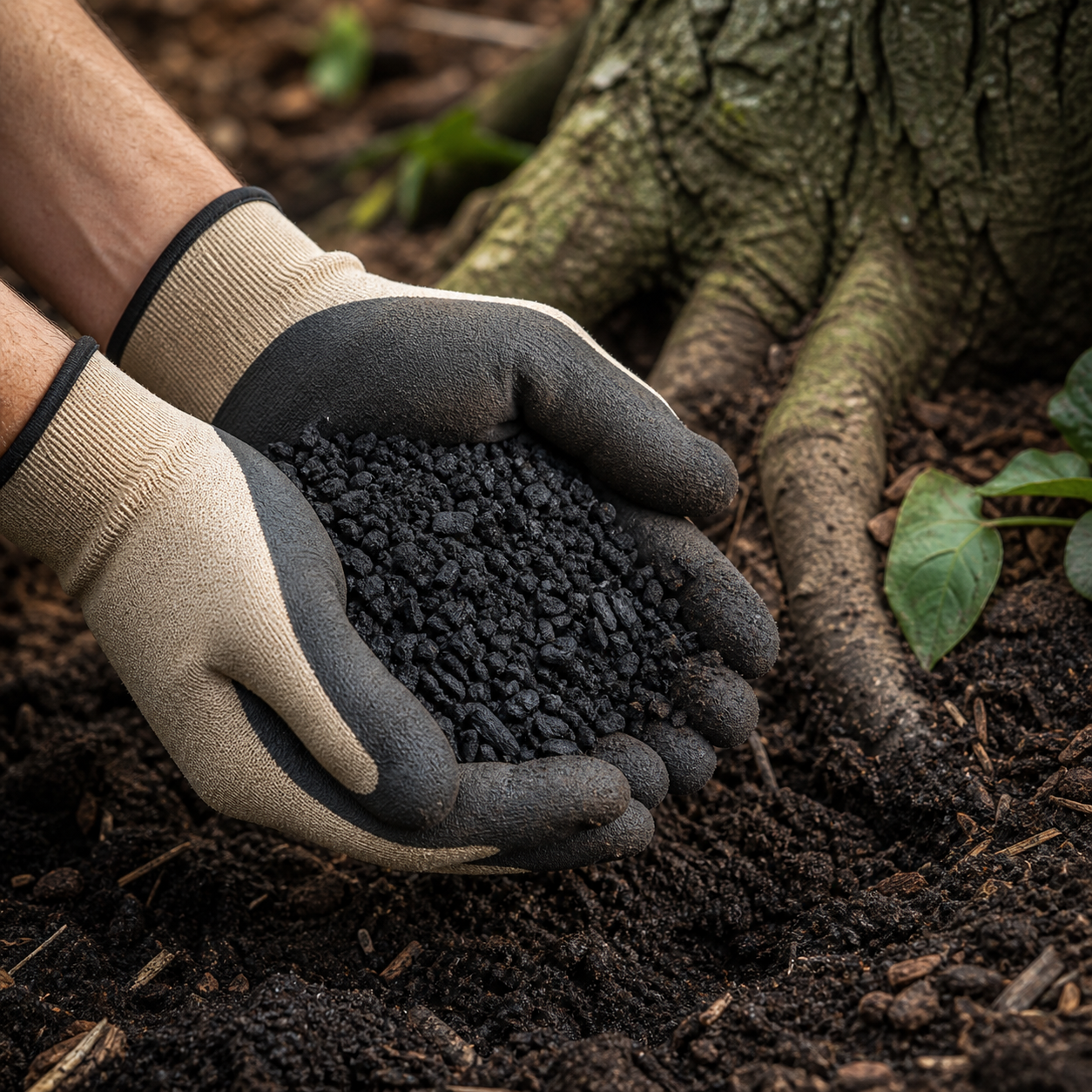
Biochar is a carbon-rich material made by heating plant material with very little oxygen. It looks a bit like charcoal, but it is made for soil rather than Saturday's burgers.
Biochar is habitat, not a bag of food
Quality biochar has a porous structure with a lot of internal surface area. Those pores can help hold water, nutrients, and provide habitat for microorganisms. Depending on the product and soil, it may also improve nutrient retention and support longer-term carbon storage.
Biochar does not automatically feed a tree, fix compaction, or replace water. Think of it as real estate. It can create useful places for moisture, nutrients, and soil organisms, but the neighborhood still needs the right residents and resources.
Why charged biochar matters
Fresh biochar can adsorb nutrients. Many products are blended or 'charged' with compost, nutrients, humic substances, or biological inputs before application. That helps load the pore space with useful material instead of asking the surrounding soil to do all the loading.
How it fits a PHC recommendation
PHC Pro may use biochar as part of a soil-health treatment where poor soil structure, low organic matter, or limited water and nutrient holding are part of the problem. It works best when matched to the site and combined with basics such as proper irrigation, mulch, decompaction, and root-zone protection.
Biochar quality and recommended rates vary. Use a product designed for horticultural or arboricultural use, follow its directions, and avoid assuming that more black stuff means more better.
Field note: Product labels and federal, state, and local requirements always come first. Confirm the diagnosis and use only labeled sites, rates, methods, and combinations.