Both methods put a treatment into the root zone. The difference is how it gets there. One is beautifully low-tech. The other gives you more control over placement.
Soil drench: simple equipment, useful method
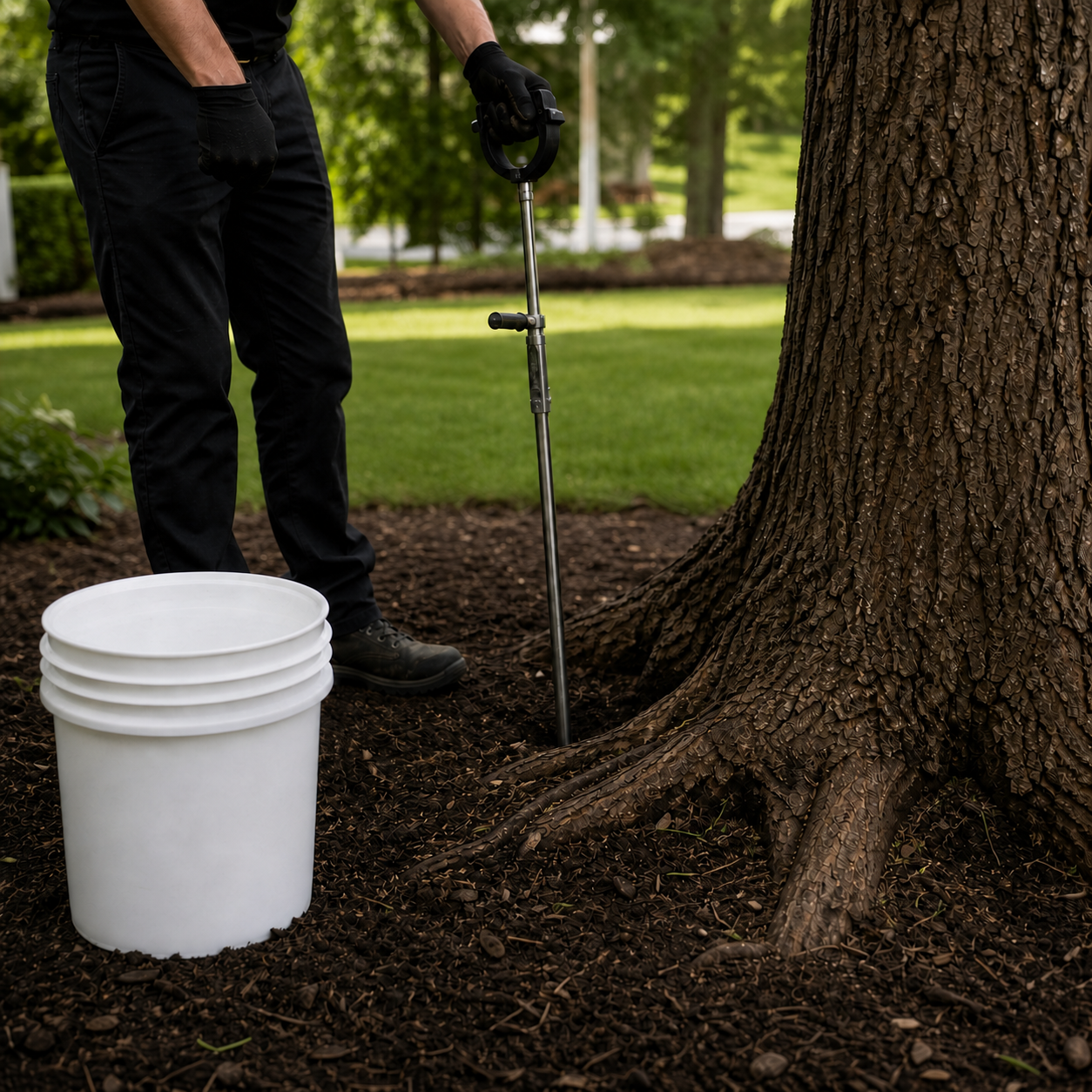
A soil drench is a measured solution applied to the soil surface around the tree, where water carries it into the treated root zone. For many labeled products, the equipment list can be as simple as water, a measuring container, and a five-gallon bucket.
Drenches can also make compatible tank mixes or treatment 'cocktails' practical. Compatible is the important word. Every product must allow the site, method, and combination, and jar testing or other label-directed compatibility checks may be needed.
Soil injection: placement below the surface
Soil injection uses equipment to place measured solution below the soil surface at specified depths and spacing. It can improve placement, reduce surface runoff in some situations, and distribute material through a planned treatment zone.
The tradeoff is more equipment, calibration, setup, and operator training. Hard, rocky, saturated, or heavily compacted soils can also make injection less friendly than it sounds on paper.
Which one should you use?
| Consideration | Soil drench | Soil injection |
|---|---|---|
| Equipment | Bucket | Soil injector, tank, and pump |
| Placement | Applied at the soil surface | Placed below the soil surface |
| Speed | Quick setup, slower if you have lots of trees | Slower setup, faster on lots of trees |
| Best fit | Accessible root zones; crews can work without extra equipment; good for small jobs | More professional-looking; faster for big jobs; places material directly into the root zone |
| Limitations | Avoid runoff if the soil is too compacted; pour slowly. Slopes and poor infiltration can also limit uptake. | Very compacted, rocky, saturated, or frozen soil can prevent proper injection. It also requires equipment, calibration, and cleanup. |
The label picks the lane
Do not convert an injection rate into a drench or invent a tank mix because the math looks reasonable. The product label controls the legal site, rate, method, protective equipment, and restrictions. Local and state requirements can add more rules.
Field note: Product labels and federal, state, and local requirements always come first. Confirm the diagnosis and use only labeled sites, rates, methods, and combinations.